

In today’s fast-paced financial world, copy trading offers a unique opportunity for beginners to learn from experienced traders and potentially generate profits. By leveraging the expertise of seasoned investors, you can learn how to navigate the financial market and make informed investment decisions. This article will explore everything about copy trading for beginners and the step-by-step guide to get started.
What is Copy Trading?
If you’ve ever wondered, “What is Copy Trading?”, well, copy trading is a common investment strategy that helps you to replicate the trades of experienced traders. This way you can learn about how to trade, know the right decisions to make, and replicate the potential wins of other traders. It’s just like having a seasoned financial expert guide your investments – you follow their lead, learn their strategies, and also execute their trades in your account.
The concept of copy trading has been around for quite some time, but it has recently gained traction with the rise of online trading platforms, including those tailored to social trading. What is copy trading in forex for beginners? In simple terms, it’s a method where traders can automatically replicate the moves of experienced traders. In the early days, traders shared strategies and recommendations manually through forums and chat rooms, relying on others to mimic their trades. However, platforms like eToro, launched in 2007, revolutionized this approach by automating the process. Now, users can select from various traders, follow their strategies, and have their trades executed directly in their accounts. This allows beginners to learn from seasoned traders while potentially reducing risk through diversification.
How Does Copy Trading Work?
Copy trading works by connecting three main participants: platforms, experienced traders, and followers. Platforms like eToro, AvaTrade, and ZuluTrade provide tools to link traders with followers. They show details about traders’ portfolios, performance, and risk levels so users can decide whom to follow.
Experienced traders are the professionals whose trades are copied. They usually have years of experience and clear strategies. Some platforms reward them with a share of profits or extra fees. Followers are often beginners or busy investors who don’t want to manage trades themselves. They pick a trader to follow, set aside funds, and let the platform handle the rest. You might also ask, how does copy trading work for cryptocurrency traders? Well, the process is similar: users choose experienced crypto traders, allocate funds, and the platform mirrors the chosen trader’s cryptocurrency trades.
For example, imagine you are new to trading and have $500. You decide to follow a trader with a good track record and invest $200 in copying them. If that trader buys $10 worth of cryptocurrency, your account might buy $2 worth based on your investment. This makes copy trading easy and convenient for beginners. It is also why beginners consider copy trading a smart way to profit.
Pros and Cons of Copy Trading
Here are some of the pros and cons of copy trading for new investors.
Pros
- Beginner-Friendly: No prior experience or in-depth market knowledge required.
- Time-Saving: Automated trading frees you from constant monitoring.
- Learning Opportunity: Observe and understand successful trading strategies.
- Diversification: Copy multiple traders to spread your investment across different strategies.
Cons
- Over-reliance: Success depends on the performance of the trader you copy.
- Platform Fees: Some platforms charge fees for automated services or commissions.
- Lack of Control: Followers have limited input over individual trades.
- Potential Losses: If the copied trader performs poorly, you bear the same losses.
How to Start Copy Trading: A Step-By-Step Guide
This section provides a detailed roadmap to get started on copy trading. It is a step-by-step guide to starting copy trading in 2025, so that you can begin your journey confidently:
1. Select a Copy Trading Broker
Choose a trusted broker like eToro, which is known for its user-friendly interface, large community, and wide range of assets. Ensure the broker is regulated in your region to guarantee safety.

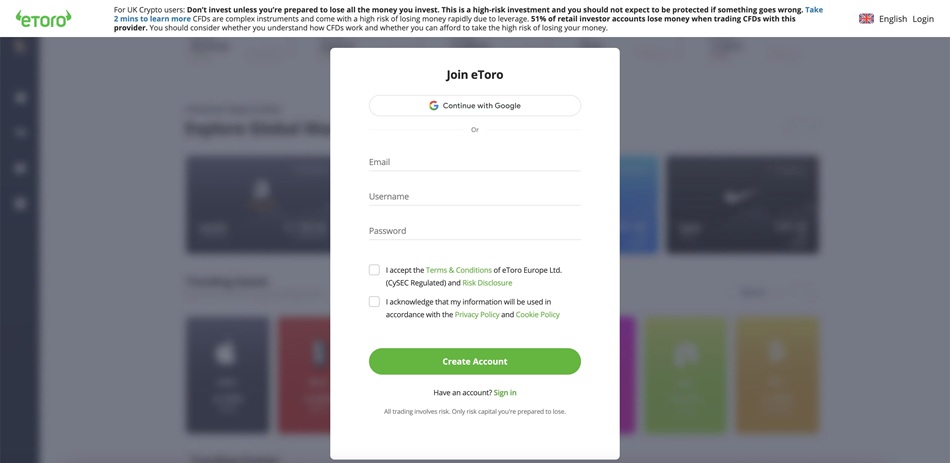
2. Create an Account
Sign up with the broker and complete your identity verification. This step is essential to meet financial regulatory requirements.
3. Fund Your Account
Deposit funds into your account. Most platforms have a minimum deposit requirement. For example, eToro requires a minimum of $200.

4. Search for a Trader to Copy
Evaluate traders based on their performance metrics, such as:
- Return on Investment (ROI).
- Risk Score: Indicates how risky their strategy is.
- Portfolio Diversification: A diversified trader is less likely to suffer significant losses.
- Market Outperformers.
- Most copied.
- Trending popularity.

5. Set Your Investment Amount
Distribute a specific amount of your investment across different traders. Some platforms allow you to set risk management tools like stop-loss orders.

6. Start Copy Trading
Activate the copy feature and let the platform replicate trades automatically. Monitor performance once in a while to ensure it aligns with your goals.

Copy Trading Risk
Although copy trading makes investing easier for beginners, it isn’t without some risks. Here are some common copy-trading risks beginners should look out for:
Market Volatility
Financial markets can be unpredictable, with sudden changes driven by economic events, political issues, or market sentiment. Copying a trader exposes you to the same level of unpredictability, which means that potential losses can occur just as quickly as gains.
Diversifying your copied trades across multiple assets and from different traders can help reduce this risk. To navigate this, consider using one of our options for best copy trading platforms for beginners in 2025, as they often include risk management tools to help mitigate market volatility.
Blind Trust in Traders
Relying solely on a trader’s past performance without understanding their strategy can backfire. Even skilled traders make mistakes, and their methods might not align with your risk tolerance or goals. If you’re wondering how to choose the best copy trader for beginners, focus on reviewing their risk scores, trading history, and portfolio diversification. Always ensure their approach matches your financial objectives.
Leverage Risks
Many platforms enable leveraged trading, which can increase profits but also drastically increase losses. Following traders who use high leverage can lead to quick losses, especially in volatile markets. Understanding the leverage levels involved in the trades you’re copying is essential.
Platform-Related Issues
Technical issues like platform downtime, connectivity errors, or bugs can disrupt trade execution. This might result in missed opportunities or trades being executed at less favorable prices. Selecting a platform with a solid reputation for reliability and strong customer support is important when dealing with this risk.
Lack of Customization
Copy trading automation often limits your ability to modify trades. You may find it frustrating if a trader you’re copying makes a decision you disagree with or misses a potential opportunity. Look for platforms that offer flexibility to adjust trades or allow partial manual intervention to maintain some control over your investments.
By understanding and addressing these risks, you can make more informed choices and reduce potential losses while benefiting from the advantages of copy trading.
Social Trading Vs Copy Trading
Many people confuse social trading and copy trading, but they are not the same. Social trading is all about interaction. It allows users to connect, share ideas, and discuss strategies. In this approach, traders learn from each other and improve their skills. However, it doesn’t require users to replicate trades. Instead, the focus is on learning and building a network.
Copy trading, on the other hand, is more hands-off. It automates the process of following a trader’s actions. When the trader you copy makes a move, it’s mirrored in your account without any extra steps on your part. This makes it ideal for those who want to invest but don’t have the time or knowledge to make their own decisions.
Social trading might be a good fit for you if you want to stay active and engaged in trading. It’s perfect for people who enjoy collaboration and learning. But if you prefer a passive approach that saves time and effort, copy trading is the better choice. Both have their benefits, but the best option depends on your goals and involvement level.
Bottom Line
Copy trading has made it easier for beginners to participate in the financial markets. By following skilled traders, you can skip the hard work of analyzing markets and still benefit from smart strategies. This approach opens doors for those who want to invest without becoming market experts.
In this guide, we covered the basics of copy trading, including choosing platforms like eToro, step-by-step instructions to get started, and tips for managing risks. We answered questions like “how much money do you need to start copy trading?”. Whether your interest lies in forex copy trading, crypto copy trading, or other assets, the key is to do your research. Take time to study traders, understand their strategies, and begin with a small investment to minimize risks.
With the right plan and a careful approach, copy trading can be an effective way to make passive income in 2025 and beyond. By balancing risk and reward, it provides beginners with a path to profit while learning about the markets along the way.