

Whether experienced or not, copy trading is one way a forex trader can partake in the biggest financial market in the world. This guide will cover how to copy forex traders, factors to consider before copying traders, the associated fees and many more.
Summary
Trading foreign exchange to benefit from value fluctuations is known as forex trading. It’s true that for the past 20 years, this market has grown at one of the fastest rates and draws a lot of people worldwide. However, because there is a very high learning curve, especially for newbies, getting started with forex trading can be confusing as well as difficult. The good news is that you can start trading forex without having to be wealthy or possess any particular skills.
This is so that you can benefit from the expertise and experience of someone who is well-versed in their field. And even if you don’t know how to trade, you can still make some gains in the forex market through Copy Trading.
Copy trading is a relatively new practice. It all started in the 1990s when traders would send their followers newsletters outlining their trades and techniques. Virtual chat rooms and trading rooms emerged as a means for traders to communicate about their goals and plans as the internet grew in popularity in the 2000s
Mirror trading and copy trading emerged in the mid-to-late 2000s as automated (or algorithmic) trading grew in popularity. Later on, automated system providers like eToro and ZulutTrade went one step further and made it possible to connect a trader’s account to another trader’s account without having to submit a strategy. They may now automatically replicate the trades of other traders, thanks to it.
Copy trading was becoming more and more popular in the 2010s, and several forex brokers began to provide this service. This comprehensive guide will help you learn how to copy forex traders, the pros and cons of copy trading, factors to consider before copying traders, and much more.





How to Copy Forex Traders
With copy trading, you can trade a real account on active markets with comparable market circumstances, position sizes, and risk exposure identical to a professional trader’s. Given below is the step-by-step guide on how to copy Forex traders
Step 1: Choose a Forex Social Trading Platform
You should start by looking for a reliable forex broker that offers copy trading. Before you make actual transactions, a reputable broker will provide you with a demo account so you may practice trading. Make sure to check how user-friendly the broker’s platform is by giving it a try. Further analyze its fees and commissions, trading tools, and other features before making real trades.
Step 2: Research and Select Top Forex Traders on the Social Platform
Finding a profitable trader to copy is the next step after selecting a reputable broker. Seek for someone who manages risk well and has a track record of winning consistently.
Step 3: Review the Top Traders’ Profile and Portfolios
Next, you need to explore the profiles of the top-performing traders on the chosen platform.
Always look for traders with a consistent and positive track record. It is wise to consider factors such as their trading strategy, risk tolerance, and performance over time. After jotting down some top traders, analyse their trading portfolios, including the types of assets they trade, risk management strategies, and overall trading approach.
Step 4: Start Copying Forex Trades
Once you’ve finalised a trader you want to copy, allocate a certain amount of your capital for copying their trades. Set the risk parameters, and initiate the copy trading process by following the platform’s instructions to link your account with the chosen trader. The platform will automatically copy their trades into your account.
Step 5: Monitor your Trading Positions
Keep a close eye on your trading positions and overall portfolio regularly. Stay in the loop regarding market conditions and any news or events that may impact your trades. Moreover, when monitoring the performance of the trader you’re copying, be ready to adjust your settings or stop copying if necessary. Furthermore, it’s in your best interest to diversify your copy trading portfolio by following multiple traders to spread risk. Ideally, you should not risk over twenty percent of your portfolio on any single strategy provider and no more than 1% on each trade.
Pros and Cons of Copying Forex Traders
Copy trading is a type of investment that may not be suitable for every individual or financial circumstance. Because of this, it’s imperative to learn about copy trading’s benefits and drawbacks before getting started.
Pros
- Copying Traders helps in Diversification.
- Time-Saving.
- Good for Novice Traders.
- Promotes Networking with knowledgeable Traders.
Cons
- Picking up the right trader can be difficult.
- It may involve additional costs to copy.
- Positive results are not guaranteed.
- Performance solely depends on the copied trader.
Factors to Consider Before Copying Forex Traders
As a result of copy trading’s recent meteoric rise in popularity, the term “people-based” portfolio has emerged to describe traders who put their money into the hands of other investors rather than taking part in their own transactions.
Choosing a trader to copy is a major challenge. So many things need to be thought about, and there are a lot of signal/strategy suppliers or copied traders on one platform.
That is why we reduced the criteria factors to a mere five. It is still a lot, but it will provide you with a solid groundwork.
Trading Strategy
The first thing to analyse when considering how to copy forex traders is to assess their trading strategy. Understand the trader’s trading strategy and make sure it aligns with your financial goals and objectives. Different traders employ various strategies, such as trend following, scalping, day trading, or swing trading. Ensure that the trader’s approach resonates with your risk appetite and investment horizon.
Moreover, look for consistency and profitability over time. Avoid traders with a high-risk, high-reward strategy if you have a low-risk tolerance, and vice versa.
Furthermore, it’s worthwhile to consider how the trader’s strategy performs under different market conditions. Some strategies may be more suitable for trending markets, while others may excel in ranging markets.
Risk Management
Determining a copy trader’s risk tolerance is as vital as determining their average profits or overall performance. Before copying forex traders, you can adjust the overall risk levels to meet your own goals and risk tolerance. This is significant because every trader starts from a different place; for instance, a more seasoned trader may have more capital to work with and a higher risk tolerance than a less seasoned trader. Moreover, make sure the copied trader uses responsible leverage levels that align with your risk tolerance.
Performance
It’s imperative to consider a signal provider’s trading performance, trading volume and frequency in order to determine whether their trading philosophy would be appropriate for your own account balance and profit margin. Moreover, look for traders who have demonstrated consistent positive performance over an extended period. Consistency is often more valuable than occasional high returns, as it suggests a more sustainable trading approach.
Drawdowns
Another factor to consider while assessing how to copy top forex traders is the maximum drawdown (MDD) level or a “Hard Stop”. This represents the most loss that can be seen in a portfolio from its peak to its lowest point before a new peak is reached. Notably, the frequency of these losses is not taken into account; rather, it solely gauges the size of the largest loss. Evaluate how the trader handles drawdowns and if they have a strategy in place to recover from losses. In general, a smaller and more manageable drawdown is preferable.
Plus, take into account how long it takes a trader to bounce back from losses. A trader with a strong recovery rate might have a more adaptable and resilient strategy.
Years of Experience
A trader with more years of experience has likely encountered various market conditions. Assessing the trader’s ability to cope with a variety of market conditions, including bull and bear markets, is in your best interest.
While experience does not ensure success, it may share a trader’s capacity to adjust to different market conditions. Look for traders who have demonstrated adaptability in response to market shifts.
Trading Platforms to Copy Forex Traders
When considering how to copy forex traders, it’s pertinent to research and assess the trading platforms offered by different forex brokers. These platforms come in a variety of forms, such as online trading platforms, mobile trading apps, and desktop applications. Let’s examine the various platforms that brokers provide in more detail.
Desktop Platform
Different forex copy trading platforms offer a desktop version that provides detailed statistics and performance metrics of signal providers. The convenience of a larger screen enhances the overall user experience, making it easier to monitor copied trades and manage risk.
On the desktop platform, users can access advanced charting tools, in-depth market analysis, and a range of trading instruments. Copy trading features are typically integrated into the platform, allowing users to explore and select experienced traders to emulate.
For example, eToro’s desktop app and its signature CopyTrader™ feature allow users to automatically replicate the trades of successful and experienced investors in real-time. This app allows traders to share insights, strategies, and market analyses. Likewise, Capital.com also offers social trading where users can copy other traders and benefit from a collaborative learning environment.

Mobile App
When learning how to copy top forex traders, look for a social trading platform that also offers a mobile app. Mobile applications bring the world of copy trading to the fingertips of users, letting them stay connected on the go.
Moreover, these apps typically offer real-time updates, interactive charts, and user-friendly interfaces. Besides, push notifications keep users updated on market movements and the performance of copied traders.
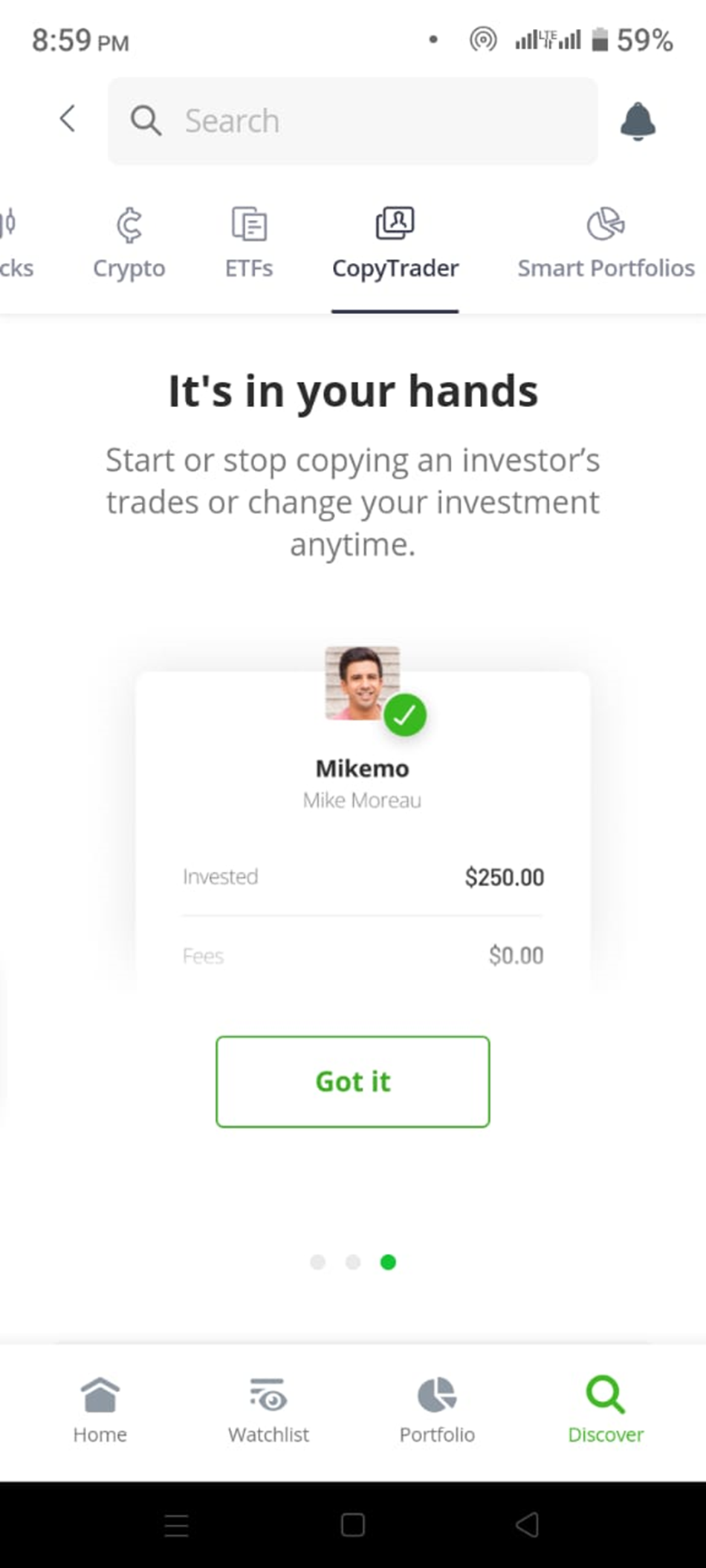
Notably, eToro and Capital.com both offer a modern and user-friendly copy trading mobile app helping traders monitor their copy trades seamlessly.
Minimum Deposit Needed to Copy Forex Traders
The minimum deposit required to copy successful forex traders largely depends on the social trading platform you choose. These platforms typically offer a range of options to accommodate various investor preferences. It’s important to note that the minimum deposit can vary significantly between platforms and may depend on factors such as the specific trader you wish to copy and the level of risk you are willing to undertake.
Generally, some platforms have a relatively low entry threshold, allowing users to start copying trades with a modest deposit. This makes social trading an attractive option for those with limited initial capital. On the other hand, more specialised platforms might need a higher minimum deposit. For instance, eToro, the popular copy trading platform, needs a minimum deposit of $200 to copy top traders.
Copy Trading Fees
One of the most important metrics to consider when learning how to copy forex traders is fees related to copy trading on the platform. Copy trading fees can vary across different brokers and social trading platforms, each adopting its own fee structure. Some platforms do offer commission-free trading. However, they allow their signal providers/copied traders to charge their copying traders monthly subscription fees or performance fees on profits generated. For instance, Naga, a copy trading platform, charges a fixed €0.99 fee per trade on copying a trader, with an additional 5% fee on profits exceeding €10.
On the flip side, some platforms may charge a commission on copy trading ranging from 0% to 50% of the Copier’s gain. Moreover, certain platforms do not charge any additional fees for copying forex traders but may still have high spreads.
Aside from these additional costs, copy traders also incur other fees such as spreads, deposits and withdrawal fees, currency conversion fees, and overnight fees. It’s worth mentioning here that eToro does not charge additional copy trading fees from its copying traders.
What Reddit and Quora Users Say About Copying Forex Traders
Given that we have explored the finer points of copying top traders, it’s time to check users’ reviews on different social platforms.
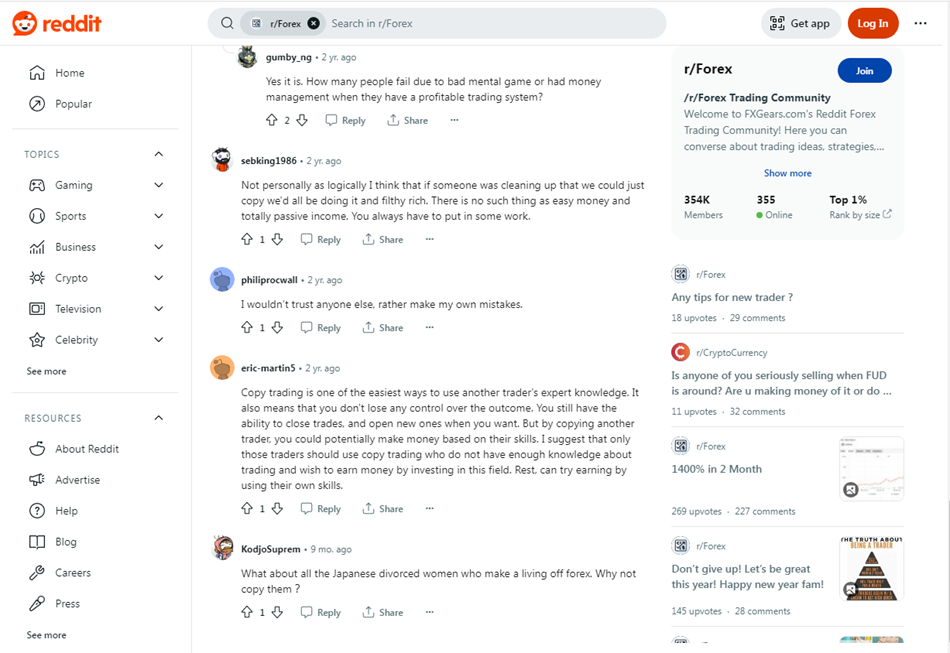
While searching through Reddit about how to copy forex traders, we found plenty of discussion threads on the platform. While the majority of those were negative, however, some of the comments supported copy trading.
One such user named “eric-martin5” stated that copy trading is one of the easiest ways to use another trader’s expert knowledge. He also suggested that only those traders who do not have enough knowledge about trading should use copy trading and wish to earn money by investing in this field. Meanwhile, the rest of the traders can try earning by using their own skills.
Quora
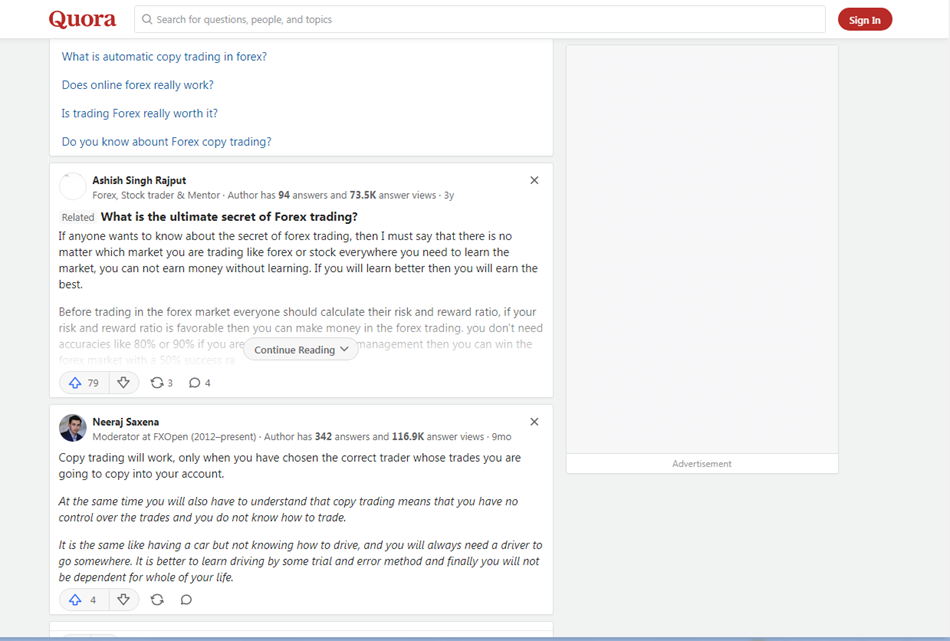
While searching through Quora about perspectives of different users on Copy Trading, we found a query about copying traders, and this user responded by stating that copy trading will work only if you choose the right trader whose trades you are going to copy on your account. He also highlighted a drawback of copy trading by stating that in copy trading, you have no control over your trades.
Bottom Line
Since copy trading only requires you to copy the moves of others, more experienced traders, it’s one of the simplest methods to dabble in trading. It is especially helpful for inexperienced traders because it enables them to learn from experienced traders and engage in markets without any prior expertise. However, copy trading has drawbacks and hazards of its own, just like any other method. When assessing how to copy forex traders, it is in your best interest to consider factors such as the trading strategy, risk management, traders’ performance, risk tolerance, drawdowns and years of experience.
As for the copy trading platform, consider its fee structure and minimum deposit, besides its user-friendliness and trading tools.
In the end, in copy trading, you hand over financial management to an unknown party. That being said, if you don’t try to trade for yourself, you won’t learn anything from only observing others’ trades. Ultimately, copy trading should only serve as a starting point for traders who take their trading career seriously.